
Updating outdated light fixtures can completely redefine the look and feel of your home. Whether you’re giving your kitchen a modern glow-up, enhancing curb appeal, or brightening a cozy reading nook, lighting updates are one of the fastest and most impactful home improvements. This guide will walk you through everything you need to know—from identifying outdated fixtures to upgrading them with style and energy efficiency in mind.
Why Updating Light Fixtures Matters
Lighting influences more than visibility—it sets the tone, mood, and even perceived size of a space. Outdated fixtures can make rooms feel smaller, darker, or stuck in another era.
By updating your lighting, you can:
- Increase home value. Modern fixtures boost aesthetics and appeal to potential buyers.
- Improve energy efficiency. LED technology and smart lighting systems reduce electricity use and utility costs.
- Enhance function. Well-placed lighting improves productivity and safety in key areas like kitchens, stairs, and hallways.
- Reflect your style. From sleek minimalism to rustic charm, lighting allows your personality to shine through.
Spotting an Outdated Fixture
Before diving into replacements, take stock of what feels old or out of sync with your space.
Signs include:
- Brass or gold-tone fixtures from the ‘80s and ‘90s.
- Fluorescent boxes or track lighting with yellowing covers.
- Dull finishes or frayed cords.
- Low light output or buzzing sounds.
- Bulky designs that clash with today’s cleaner lines.
If you notice one or more of these issues, it’s time for a refresh.
Choosing the Right Style for Your Home
Match new fixtures to your home’s architecture and existing décor.
Here are a few design directions to consider:
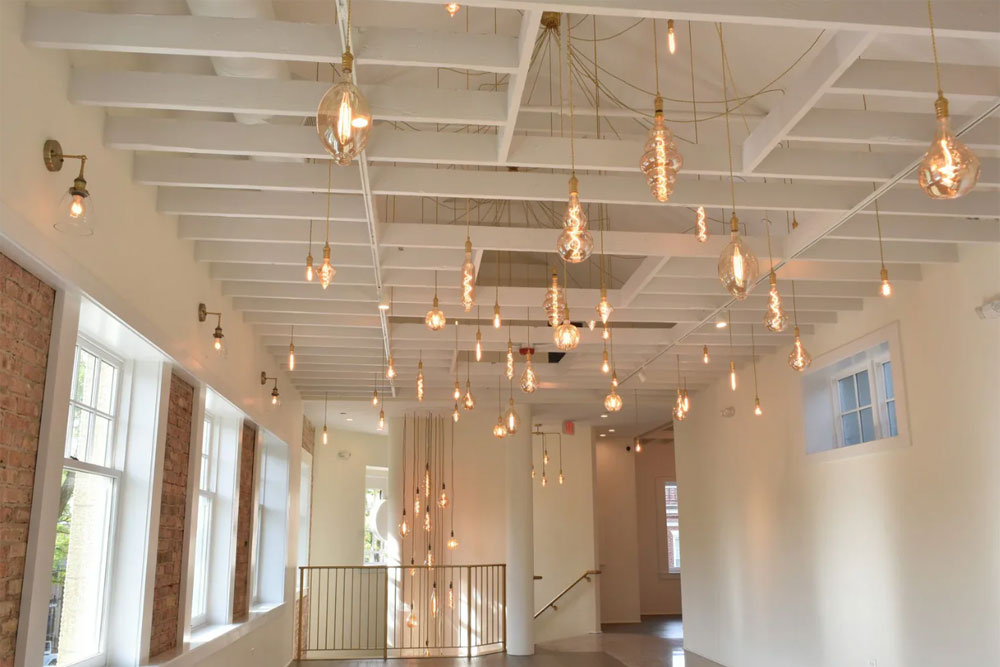
- Modern farmhouse: Matte black, wood accents, and vintage Edison bulbs.
- Contemporary: Sleek metals, glass, and geometric shapes.
- Classic traditional: Crystal chandeliers or bronze sconces.
- Coastal casual: Whitewashed finishes and woven textures.
When choosing materials, think about durability and maintenance. Metal or glass fixtures typically last longer and are easier to clean than fabric shades.
Picking the Perfect Placement
Lighting design is about layering light to balance brightness and ambiance.
The three key types of lighting are:
- Ambient lighting: General illumination from ceiling fixtures, recessed lights, or chandeliers.
- Task lighting: Focused light for workspaces—perfect for reading corners or kitchen prep areas.
- Accent lighting: Highlights artwork, shelving, or architectural features.
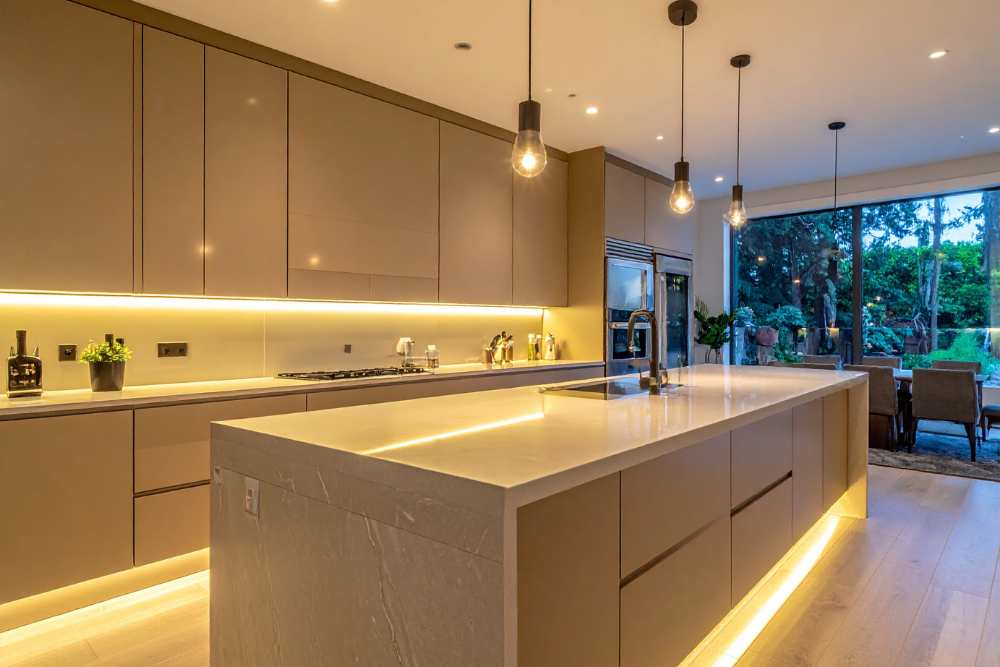
For instance, if you’re redesigning your kitchen, consider adding hanging lights for kitchen island areas to provide practical brightness and a visual centerpiece. Pendants in groups of two or three can make the island stand out beautifully while providing essential illumination for cooking and entertaining.
Energy Efficiency and Smart Upgrades
Today’s lighting isn’t just about looks—it’s about performance. Replacing old fixtures with energy-efficient models can reduce electricity use by up to 75%.
Consider:
- LED bulbs: Long-lasting, available in warm to daylight tones, and compatible with most modern fixtures.
- Dimmers: Allow you to control brightness depending on the time of day or activity.
- Smart bulbs and switches: Control your lights remotely or create schedules for convenience and security.
Many homeowners integrate smart lighting into voice-controlled systems, which makes it easier to manage lighting alongside other smart home devices.
DIY vs. Hiring a Professional
If you’re familiar with basic electrical work, swapping out light fixtures can be a satisfying DIY project. Turn off the circuit breaker, check the wiring connections, and follow the manufacturer’s instructions carefully. However, if you encounter aluminum wiring, outdated electrical boxes, or complex installations such as chandeliers on high ceilings, calling a licensed electrician is the safest option. Professionals can also help ensure fixtures are properly supported and
code-compliant—especially for heavy or multiple-light installations.
Trending Styles for 2026
In 2026, lighting design trends emphasize warmth, natural materials, and sustainability.
Expect to see:
- Textured finishes like rattan, linen, and hammered metal.
- Soft gold and champagne tones replacing chrome and brushed nickel.
- Mixed materials, such as wood paired with frosted glass.
- Sculptural shapes that double as art installations.
- Hidden LEDs for an uncluttered, floating-light effect.
These details help your lighting feel contemporary without clashing with existing furniture or architectural features.
Updating Fixtures in Every Room
- Living room: Replace old ceiling fans with sleek LED ceiling lights. Add floor lamps for balance.
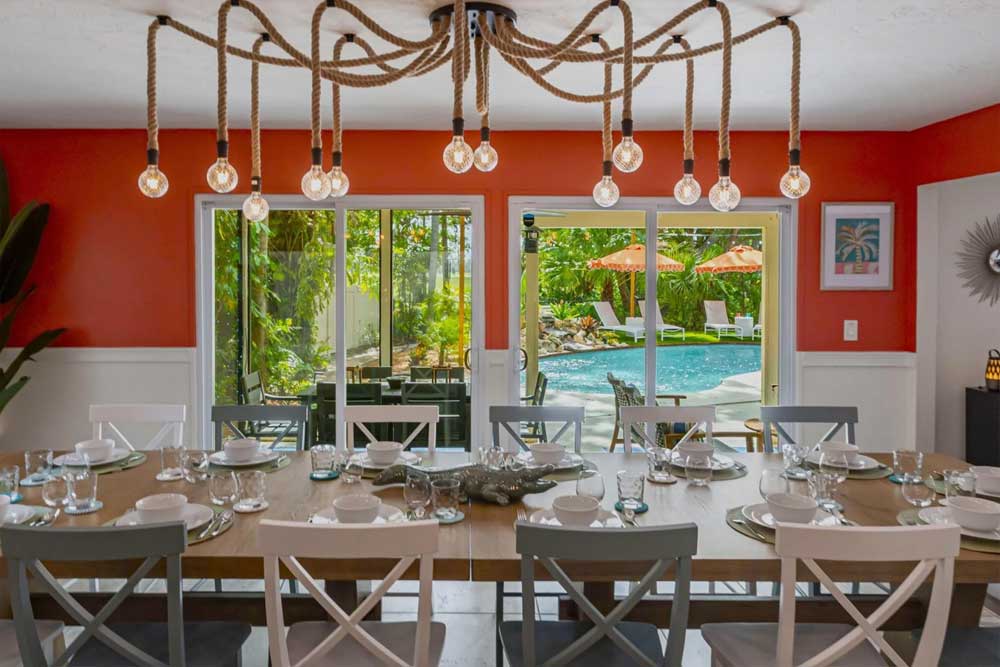
- Dining area: Replace single pendants with cluster lights to anchor the table visually.
- Bathroom: Use fixtures rated for damp areas with frosted shades to soften light.
- Bedroom: Incorporate wall sconces with built-in reading arms for functionality.
- Outdoor spaces: Add weatherproof sconces or motion-detecting lanterns to boost both appearance and safety.
Bringing It All Together
Updating outdated light fixtures is an affordable and effective way to refresh your entire home. With a few mindful choices—matching the right style, ensuring placement works for daily life, and adding energy-efficient technologies—you’ll brighten your rooms while boosting value and comfort.
Whether you’re transforming a single area or tackling a whole-house upgrade, start small, experiment with finishes, and layer your lighting for depth. Even subtle updates can turn a dated room into your new favorite space to unwind, entertain, or feel at home. And if your home improvement plans extend beyond indoors—perhaps adding outdoor relaxation spaces that include exploring swim spas in Idaho for year-round comfort with ambient lighting—remember that cohesive upgrades create harmony throughout your living environment.